Scholarly Work
Since literary studies became a formal discipline and profession, it has organized its essential identity around period – the early modern period, the nineteenth century, or the ancient world. My scholarship is interested, instead, in micro-spaces of literary production: the whaling ship, the road trip, the hotel room, and the swamp.
Books
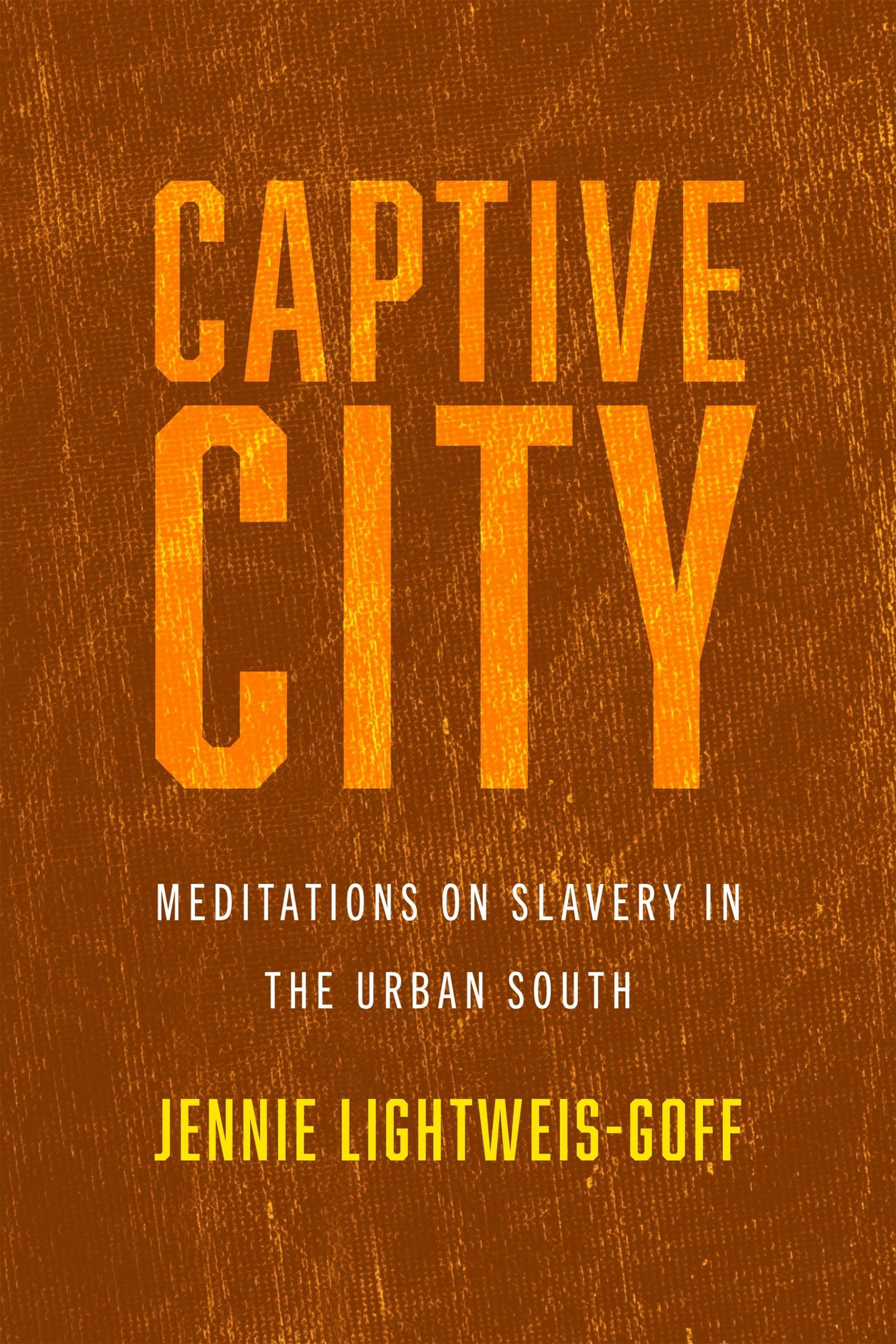
Captive City: Meditations on Slavery in the Urban South
Captive City explores the paths of slavery in coastal cities, arguing that captivity haunts the “hospitality” cultures of Charleston, New Orleans, Savannah, and Baltimore. It is not a history of urban slavery, but a literary reflection that argues for coastal cities as a distinct region that scrambles time, resisting the “post” in postindustrial and the “neo” in neoliberalism. Jennie Lightweis-Goff offers a cultural exploration bound by American literature, especially life-writing by the enslaved, as well as compelling reassessments of works by canonical writers such as Frederick Douglass, Harriet Jacobs, and Hector St. John de Crevecoeur.
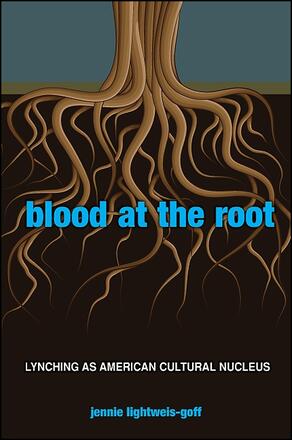
Blood at the Root: Lynching as American Cultural Nucleus
Examines the relationship of lynching to black and white citizenship in the 19th and 20th century U.S. through a focus on historical, visual, cultural, and literary texts.
Teaching
I have taught four academic disciplines in three countries. In China, I taught expatriate writers like Henry James and Edith Wharton, to help native students understand the experience of dislocation and moving boundaries.
Within Medical and Health Humanities programs, I supervise clinical shadowing, introducing pre-med students to unusual genres – including the sonnet and the sestina—to help find language for alienating encounters with bodies in pain.
As a writing teacher, I offer students lateral encounters with the tasks of the curator, editor, and researcher that we move through before we ever put words on a page.
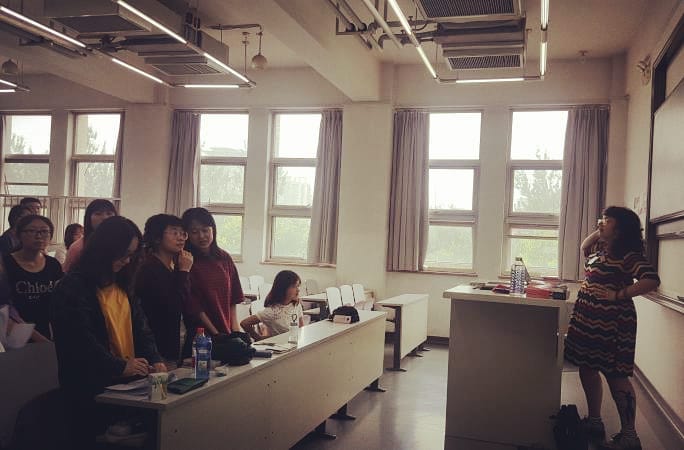
Classroom in Beijing, China